
HOW THE STAGES CONNECT
Crab stick manufacturing process
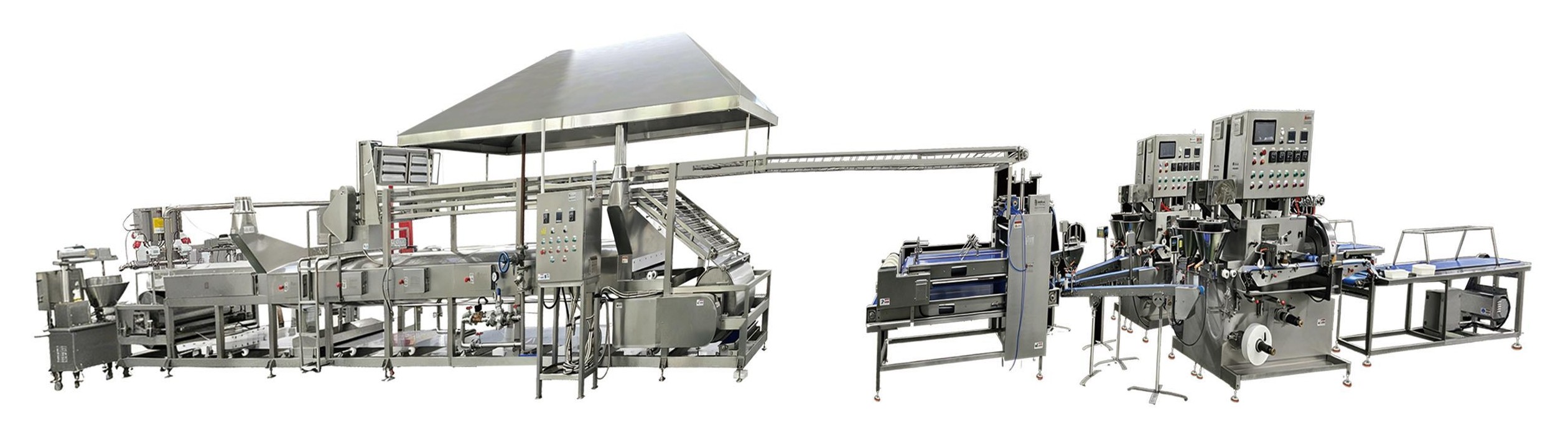
Crab sticks are formed from a prepared surimi mixture. The equipment turns that mixture into a continuous sheet, develops the layered texture through cutting and bundling, then shapes, colors, wraps and cuts the product.
This overview begins with surimi supplied to the crab stick line. Upstream equipment for processing whole fish into surimi is a separate scope. The sequence and equipment connections below are reviewed against the intended product and recipe.
1. Prepare the surimi mixture
Cut and mix the surimi with the selected recipe ingredients to prepare the paste for forming. A feeding or pumping arrangement transfers it to the next machine.
The discussion starts with the incoming material, recipe and batch handling. The preparation equipment and the continuous downstream line need a compatible supply rhythm.
- Equipment: cutting or mixing equipment and a paste-feed arrangement.
- Confirm: incoming surimi condition, recipe handling and the connection to the forming machine.
2. Form a continuous sheet
The forming section spreads the prepared paste into a continuous sheet. Feed delivery and sheet formation are coordinated with the cooking section.
Sheet width and thickness are selected for the target product and the downstream cutting arrangement. A sheet-forming machine and a later pressing or shaping machine perform different jobs in the line.
- Equipment: paste feeding and continuous sheet-forming equipment.
- Confirm: required sheet format, feeding interface and available working width.
3. Cook and cool the sheet
The sheet passes through the selected cooking arrangement before cooling and transfer to texture-forming equipment. YUKE literature shows a steel-belt cooker within the continuous line.
Heating method, processing conditions and cooling arrangements must be matched to the recipe and factory utilities. This equipment overview does not prescribe a universal cooking temperature or processing time.
- Equipment: cooking section, conveying and the agreed cooling arrangement.
- Confirm: heating utility, recipe requirements and transfer conditions.
4. Cut strands and form the bundle
Thin-cutting equipment divides the prepared sheet into strands. The gathering and bundling section brings those strands together to create the layered structure of the product.
Some product formats add pressing, oblique cutting, turning or ordering operations. The choice follows the desired texture and shape; one cutting arrangement should not be assumed to produce every format.
- Equipment: thin-cutting and bundling equipment, with product-specific shaping options.
- Confirm: strand appearance, bundle section, orientation and transfer to finishing.
5. Apply color and wrap
The finishing section applies the selected surface color and wraps the formed product. The equipment described in the quotation material combines coloring, film handling and heat sealing.
Confirm the color application method and film specification together with the product dimensions. The line needs a stable handoff from the forming section to the wrapping unit.
- Equipment: coloring feed, film handling, wrapping and sealing equipment.
- Confirm: product shape, color coverage, wrapping material and transfer alignment.
6. Cut to length and transfer for packing
The cutting unit portions the product to the agreed length and transfers it to the next stage. Individual wrapping and the final retail or foodservice pack are separate configuration decisions.
Specify the finished pack format and the equipment that will receive the product. Infeed spacing, discharge height and operating speed affect how the machines connect.
- Equipment: length-cutting unit, discharge conveyor and agreed packing interface.
- Confirm: finished length, pack format and downstream handling.
7. Coordinate freezing and the cold chain
Plan how the chosen product and packaging format connect to downstream freezing, storage and dispatch. These interfaces are part of factory planning and must be included explicitly where equipment supply is required.
The final proposal should distinguish the crab stick processing equipment from external packing, refrigeration and site utilities. This avoids assuming that every downstream machine is included in a line quotation.
- Planning scope: product transfer, freezing interface, storage and the supply boundary.
- Confirm: existing downstream equipment and any additional equipment to be supplied.
Use a product trial to agree the process
Share the finished-product sample and describe the texture, appearance, dimensions and packaging you want. Agree the proposed equipment sequence and the way trial results will be checked before fixing the final configuration.
LET’S BUILD YOUR NEXT PRODUCTION LINE
Your product.Our next conversation.
Tell us what you want to make. We’ll help you work out what comes next.
Let’s talk